Deploy Obsidian on your own server.

Obsidian is a powerful knowledge base that works on top of a local folder of plain text Markdown files. It provides a flexible and extensible platform for note-taking, knowledge management, and personal knowledge base creation.
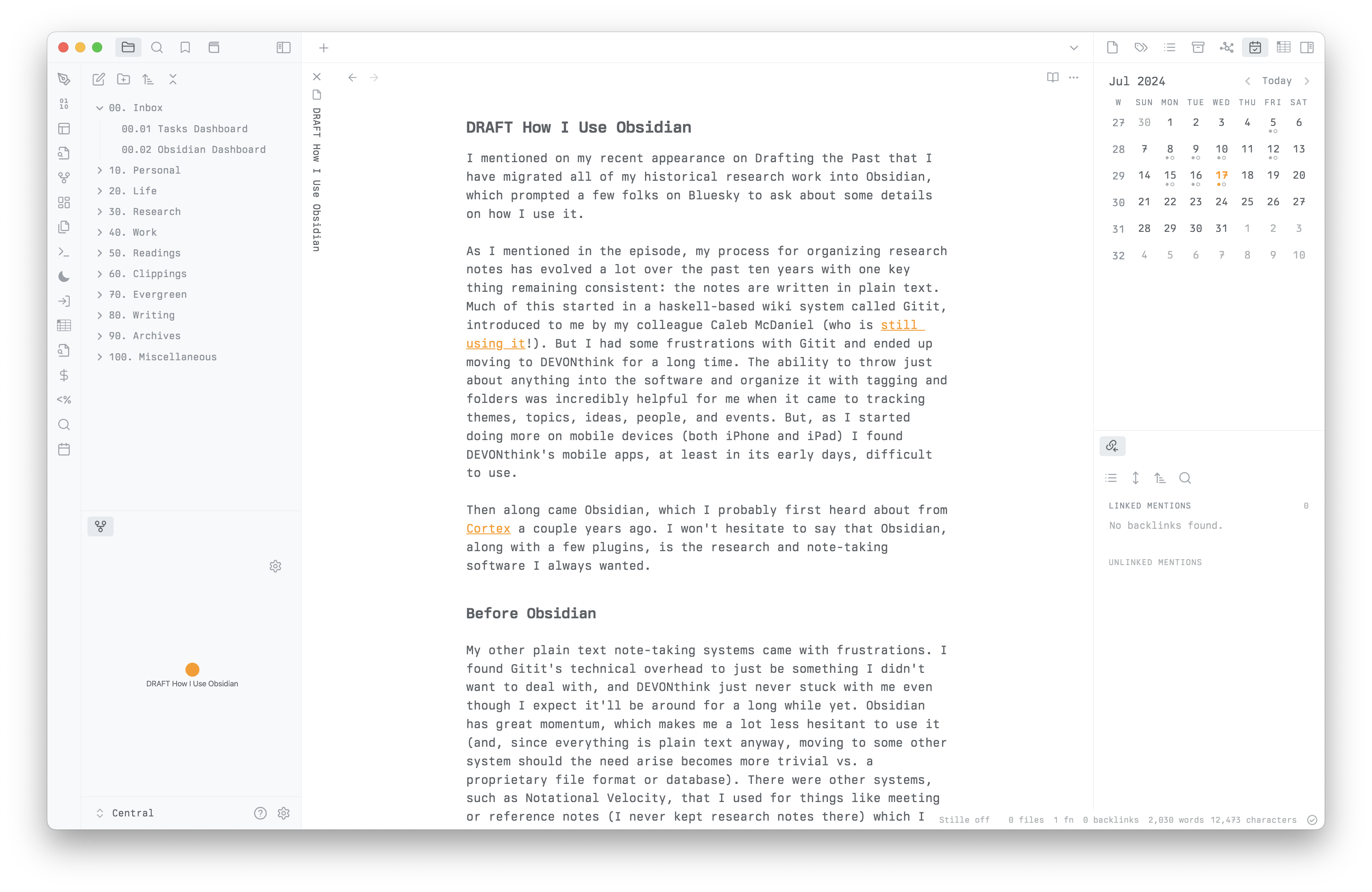
Screenshots
A closer look at Obsidian.
Setup time
A few minutes
Deployment
Your own server
Services
1 connected service
Everything you need, running where you choose.
Get the full Obsidian experience with Easypanel handling the repetitive infrastructure work around it.
From template to live app in three steps.
Easypanel turns the template into real services, storage, and domains on the server you already control.
Already have Easypanel? Open your dashboard at the URL or IP of your own installation.
Installation guide| Option | Default | Required |
|---|---|---|
App Service Name | obsidian | Required |
App Service Image | lscr.io/linuxserver/obsidian:1.12.7 | Required |
Version bumped to 1.12.7
Deploy with confidence.
The template handles the application setup while Easypanel keeps the infrastructure understandable and under your control.
Related templates