Deploy Squirrel Servers Manager on your own server.

Squirrel Servers Manager logo

Squirrel Servers Manager (SSM) is a user-friendly, UI/UX-focused server and configuration management tool. It lets you connect to remote servers over SSH, manage Docker containers and Compose stacks, execute Ansible playbooks, and monitor server health — all from a single web interface. SSM includes a built-in Prometheus instance for…

Your infrastructureAutomatic HTTPSNo lock-in

Screenshots

A closer look at Squirrel Servers Manager.
Squirrel Servers Manager screenshot 1

Setup time

A few minutes

Deployment

Your own server

Services

6 connected services

Why Squirrel Servers Manager

Everything you need, running where you choose.

Get the full Squirrel Servers Manager experience with Easypanel handling the repetitive infrastructure work around it.

SSH-Based Device Connectivity
Add servers using SSH key or password authentication. SSM establishes secure tunnels for all management operations and keeps credentials encrypted at rest using a vault password.
Real-Time Metrics with Prometheus
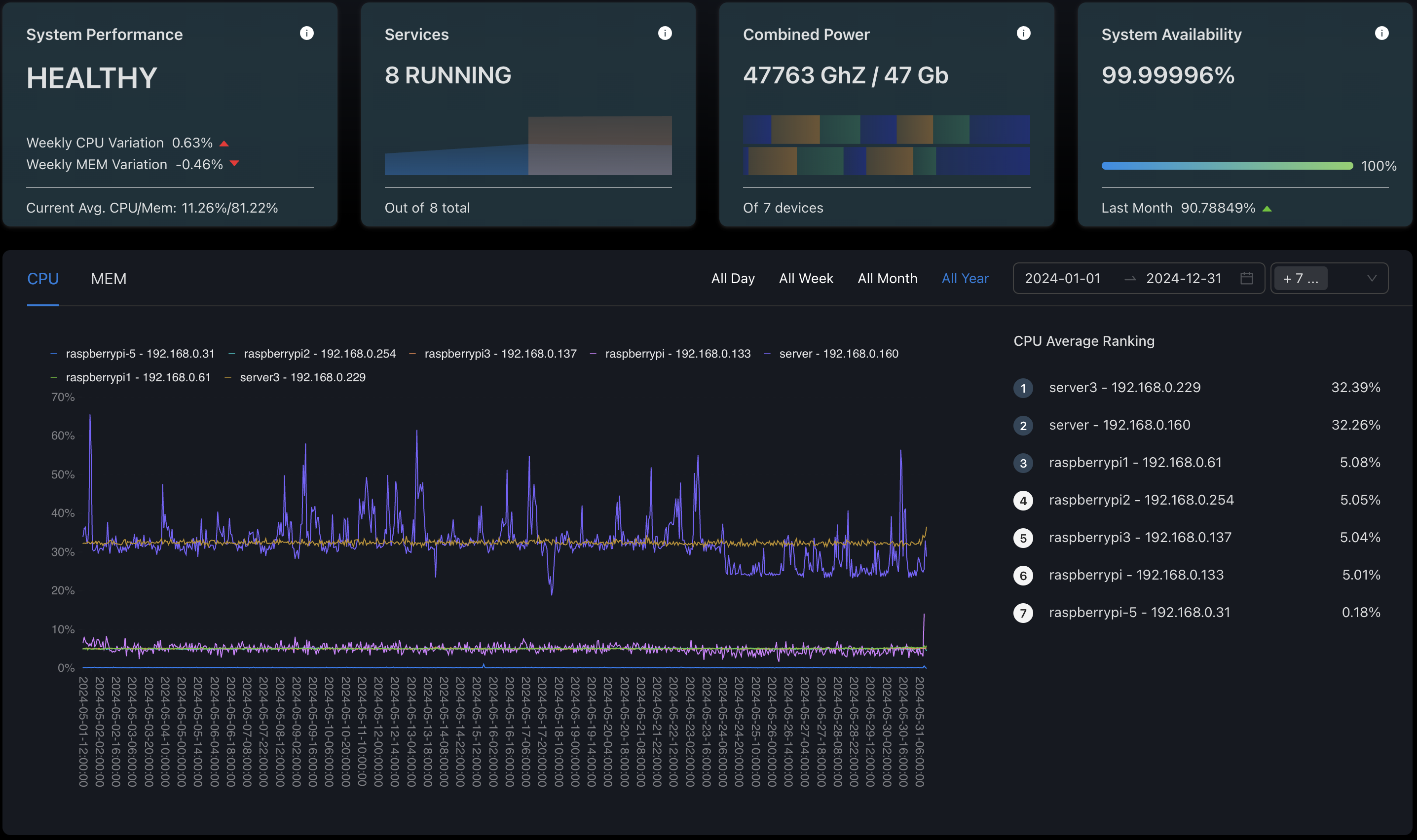
A bundled Prometheus instance collects server and container metrics. The dashboard surfaces CPU, memory, and disk usage so you can spot issues before they become incidents.
Multi-User with Role-Based Access
Create multiple user accounts with different permission levels. Teams can share a single SSM instance without granting everyone full administrative access.
Ansible Integration
SSM ships with Ansible support out of the box. Connect remote playbook repositories over Git, browse available roles and tasks, and execute them on demand or on a schedule.
Unified Server Management
Manage all your remote servers from one place. SSM connects over SSH and gives you a full-featured dashboard to monitor health, run commands, and deploy workloads without juggling multiple tools.
Ansible Playbook Execution
Run Ansible playbooks directly from the UI. Import playbooks from remote Git repositories or write them inline, then execute them against any connected server with real-time output streaming.
How it works

From template to live app in three steps.

Easypanel turns the template into real services, storage, and domains on the server you already control.

Already have Easypanel? Open your dashboard at the URL or IP of your own installation.

Installation guide
1
Open your dashboard
Visit the URL or IP of your Easypanel installation and choose the target project.
2
Choose Squirrel Servers Manager
Open Templates, select Squirrel Servers Manager, then review its service names and configuration.
3
Deploy and open your app
Easypanel starts every service and provisions an HTTPS domain for you.
Installation options
The template asks for these values before creating your services.
OptionDefaultRequired

App Service Name

squirrelserversmanagerRequired

Proxy Service Image

ghcr.io/squirrelcorporation/squirrelserversmanager-proxy:v0.5.2Required

Server Service Image

ghcr.io/squirrelcorporation/squirrelserversmanager-server:v0.5.2Required

Client Service Image

ghcr.io/squirrelcorporation/squirrelserversmanager-client:v0.5.2Required

Prometheus Service Image

ghcr.io/squirrelcorporation/squirrelserversmanager-prometheus:v0.5.2Required
Resources
Project documentation and source code.
Latest template update
Jun 29, 2026

first release

Questions

Deploy with confidence.

The template handles the application setup while Easypanel keeps the infrastructure understandable and under your control.

Keep exploring

Related templates

Browse all
Dockge logo
Dockge
Dockge is a modern, self-hosted Docker Compose management tool that provides a beautiful and intuitive web interface for managing your Docker Compose stacks. It allows you to create, edit, start, stop, and monitor your Docker Compose applications through a user-friendly dashboard. Dockge simplifies Docker Compose management with features like real-time logs, stack monitoring, and easy configuration editing.
View template
Gatus logo
Gatus
Gatus is a self-hosted automated service health dashboard that monitors the uptime and performance of your services, APIs, and websites. The application provides a clean, modern web interface to visualize the health status of all your monitored endpoints in real-time. Gatus performs periodic health checks on configured endpoints, evaluating custom conditions like HTTP status codes, response body content, response times, and more. The dashboard displays detailed metrics including uptime percentages, average response times, and historical status data. With support for various alerting integrations including Discord, Slack, PagerDuty, and custom webhooks, Gatus can notify you immediately when services go down or fail health checks. The application supports complex condition evaluation using JSON path queries, pattern matching, and response time thresholds. Perfect for DevOps teams monitoring microservices infrastructure, system administrators tracking critical services, developers needing uptime monitoring for their applications, or anyone who wants a simple, self-hosted alternative to commercial monitoring services with complete control over their health checks and data.
View template
Dockhand logo
Dockhand
Dockhand is a modern Docker container management and monitoring tool that provides an intuitive web interface for managing your Docker containers, images, volumes, and networks. With real-time container statistics, log viewing, and container lifecycle management, Dockhand simplifies Docker operations for both developers and system administrators. The application offers comprehensive container management capabilities including start, stop, restart, and removal operations, along with detailed container information and resource usage monitoring. Perfect for developers who need a visual interface for Docker management, system administrators monitoring container infrastructure, or teams looking for an alternative to command-line Docker tools.
View template
Squirrel Servers Manager logo
Ready to deploy Squirrel Servers Manager?
Open your own Easypanel dashboard, choose Squirrel Servers Manager from Templates, and review the deployment options.