All templates

Deploy Tugtainer on your own server.

Tugtainer logo

Tugtainer is a self-hosted Docker container management application that provides a web-based interface for managing Docker containers and images. Built with modern architecture, Tugtainer offers comprehensive container management capabilities including container lifecycle management, image management, and network configuration. The…

Your infrastructureAutomatic HTTPSNo lock-in

Screenshots

A closer look at Tugtainer.
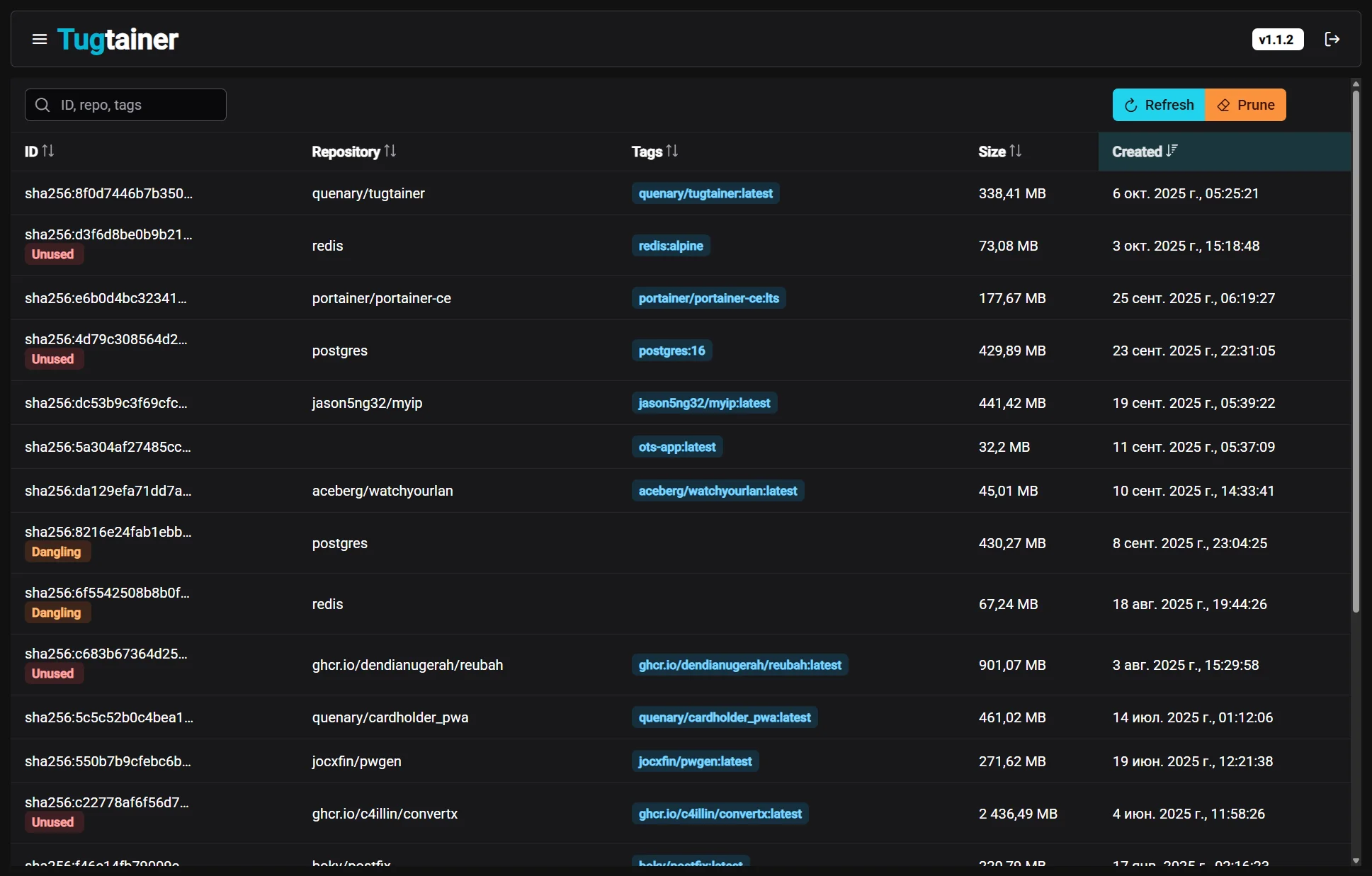
Tugtainer screenshot 1

Setup time

A few minutes

Deployment

Your own server

Services

2 connected services

Why Tugtainer

Everything you need, running where you choose.

Get the full Tugtainer experience with Easypanel handling the repetitive infrastructure work around it.

Container Management
Start, stop, restart, and manage Docker containers with an intuitive web interface.
Image Management
View, pull, and manage Docker images with comprehensive image management tools.
Network Management
Configure and manage Docker networks through the web interface.
Secure Socket Access
Socket proxy service provides secure access to Docker socket with configurable permissions and access controls.
Web-Based Interface
Access and manage your Docker environment through a modern web interface accessible on port 80.
Persistent Storage
Application data is stored in a dedicated volume at /tugtainer for reliable data persistence.
How it works

From template to live app in three steps.

Easypanel turns the template into real services, storage, and domains on the server you already control.

Already have Easypanel? Open your dashboard at the URL or IP of your own installation.

Installation guide
1
Open your dashboard
Visit the URL or IP of your Easypanel installation and choose the target project.
2
Choose Tugtainer
Open Templates, select Tugtainer, then review its service names and configuration.
3
Deploy and open your app
Easypanel starts every service and provisions an HTTPS domain for you.
Installation options
The template asks for these values before creating your services.
OptionDefaultRequired

App Service Name

tugtainerRequired

App Service Image

ghcr.io/quenary/tugtainer:v1.29.1Required

Socket Proxy Image

ghcr.io/linuxserver/socket-proxy:3.2.17-r0-ls79Required

Timezone

Timezone for the application (e.g., Asia/Karachi, America/New_York, Europe/London)

Asia/KarachiRequired

Socket Proxy Containers

Enable container operations (0 or 1)

1Optional

Socket Proxy Events

Enable event streaming (0 or 1)

1Optional

Socket Proxy Images

Enable image operations (0 or 1)

1Optional

Socket Proxy Info

Enable info endpoint (0 or 1)

1Optional

Socket Proxy Log Level

Log level for socket proxy (debug, info, warning, error)

warningOptional

Socket Proxy Ping

Enable ping endpoint (0 or 1)

1Optional

Socket Proxy Networks

Enable network operations (0 or 1)

1Optional

Socket Proxy Post

Enable POST operations (0 or 1)

1Optional

Socket Proxy Version

Enable version endpoint (0 or 1)

1Optional
Resources
Project documentation and source code.
Latest template update
May 7, 2026

Version bumped to v1.29.1

Questions

Deploy with confidence.

The template handles the application setup while Easypanel keeps the infrastructure understandable and under your control.

Keep exploring

Related templates

Browse all
Dockhand logo
Dockhand
Dockhand is a modern Docker container management and monitoring tool that provides an intuitive web interface for managing your Docker containers, images, volumes, and networks. With real-time container statistics, log viewing, and container lifecycle management, Dockhand simplifies Docker operations for both developers and system administrators. The application offers comprehensive container management capabilities including start, stop, restart, and removal operations, along with detailed container information and resource usage monitoring. Perfect for developers who need a visual interface for Docker management, system administrators monitoring container infrastructure, or teams looking for an alternative to command-line Docker tools.
View template
Dockge logo
Dockge
Dockge is a modern, self-hosted Docker Compose management tool that provides a beautiful and intuitive web interface for managing your Docker Compose stacks. It allows you to create, edit, start, stop, and monitor your Docker Compose applications through a user-friendly dashboard. Dockge simplifies Docker Compose management with features like real-time logs, stack monitoring, and easy configuration editing.
View template
PruneMate logo
PruneMate
PruneMate is a self-hosted Docker cleanup and management tool that provides a web-based interface for pruning unused Docker resources from your system. It helps you reclaim disk space by identifying and removing unused containers, images, volumes, networks, and build cache. With its intuitive dashboard, you can easily monitor Docker resource usage, schedule automatic cleanup tasks, and manually trigger pruning operations without using command-line tools. PruneMate connects directly to your Docker daemon via the Docker socket, allowing it to safely analyze and clean up orphaned resources that accumulate over time. The application features configurable cleanup schedules, selective pruning options to choose which resource types to clean, detailed logging of all cleanup operations, and real-time statistics showing disk space recovered. With timezone support and customizable time format settings, you can schedule cleanup operations to run during off-peak hours. Perfect for developers and system administrators who manage Docker environments and want to automate the cleanup of unused resources, homelab enthusiasts running multiple containers who need to manage disk space efficiently, CI/CD environments where frequent image builds create significant cleanup overhead, or anyone looking for a simple web interface to manage Docker resource cleanup without remembering complex docker system prune commands.
View template
Tugtainer logo
Ready to deploy Tugtainer?
Open your own Easypanel dashboard, choose Tugtainer from Templates, and review the deployment options.